


WOMEN OF NAPLES
Maria Angela Ardinghelli

Eugenio Comba in his “Illustrious Italian Women. Suggested for example to young women” he wrote of her: «a woman of prodigious ingenuity [...] it is not possible to talk about physics without praising Maria Angela Ardinghelli who made herself known from her early youth for her talents and her culture». Again, the French astronomer Jerome De La Lande wrote: «Mademoiselle Ardinghelli is at the head of those illustrious women who in Italy are the glory of their sex». Maria Angela Ardinghelli was born in Naples in 1728, to a noble family of Florentine origin. He received a literary education studying rhetoric, Latin and philosophy and later devoted himself to scientific studies with some of the best scholars of the kingdom such as the physicist Giovanni Maria Della Torre and the mathematician Vito Caravelli. Maria Angela became an expert in mathematics, algebra, and physics to the point that she was invited to participate in the exclusive salon of Ferdinando Vincenzo Spinelli, Prince of Tarsia, who had created a laboratory of Newtonian physics and electricity in 1747. The scientist Ardinghelli was a point of reference even beyond the borders of the Neapolitan city, a valuable interlocutor included in the national and international cultural circuit of the eighteenth century. She played a fundamental role in connecting the communities of Naples and Paris with her work as a correspondent (the first woman) at the Academy of Sciences in Paris, thanks to a decades-long correspondence with Abbot Jean-Antoine Nollet, a prominent figure in the scientific society of the time, an experimental physicist, and master of the royal princes of France. If the recurring topic of their letters was electricity, there was no shortage of reflections and exchanges of opinion also on natural and physical phenomena such as air and winds, volcanoes, Vesuvius. A scientist, physicist, and translator, her fame is linked to the arduous translations of the works of the English botanist and physicist Stephen Hales, whose inaccurate calculations she corrected, demonstrating remarkable linguistic as well as scientific skill. From her position “at the head” of illustrious women she was clear about the weight of prejudices against women in the sciences and, in a letter to the French ambassador in Naples, de l'Hopital, she wrote: «I would be sorry, most excellent sir, for the many men, even learned men who stupidly (in my opinion) disapprove of scientific studies for women, if there were no other wiser and more judicious ones, who approve and praise them»
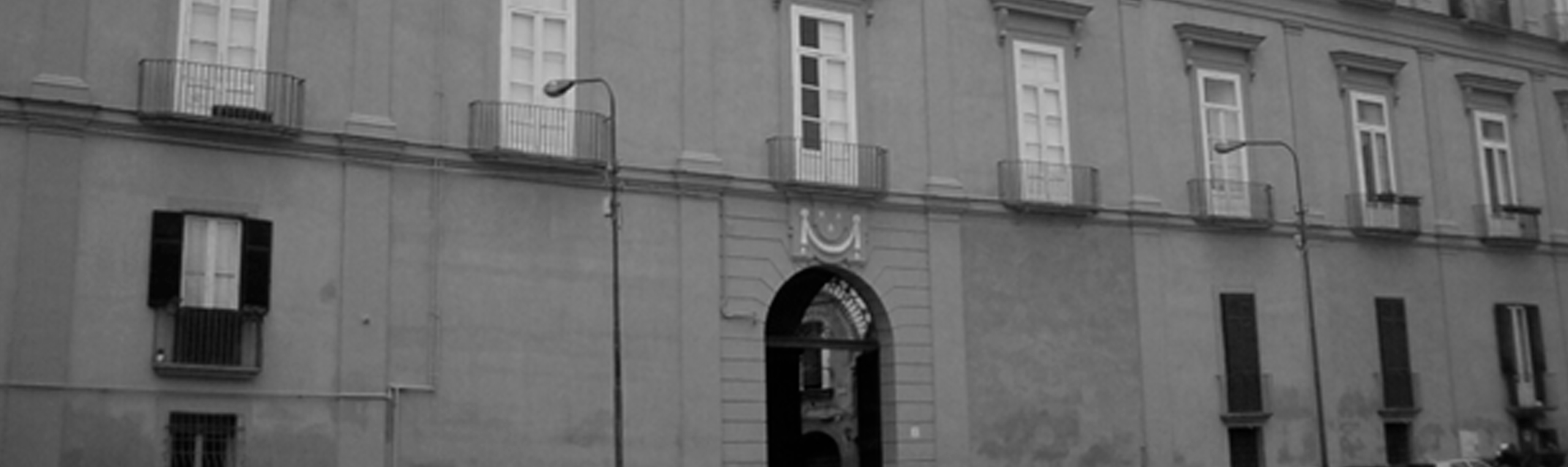
Spinelli Palace of Tarsia – The scientific salon of Maria Angela Ardinghelli
In the heart of the ancient center of Naples, among the elegant rooms of Spinelli Palace of Tarsia, a little-known but extraordinary page in the history of female science takes shape. In this place lived and worked Maria Angela Ardinghelli, noblewoman, mathematician and physicist of the 18th century, central figure of the Neapolitan Enlightenment. The figure of Maria Angela Ardinghelli is linked to Palazzo Spinelli di Tarsia, a true laboratory of thought and experimentation where intellectuals, philosophers and scientists gathered. It was precisely here that he conducted one of his experiments on’electricity, a cutting-edge discipline for the time, communicating as equals with figures such as Benjamin Franklin and publishing in European scientific journals.